
Find Residents Across Duluth Records
Start from whatever you already know. Put an exact address straight into the Gwinnett property search. A full name can fit several places at once. Try the deed index, a court party search, probate files, or a professional license listing. Voters checking their own registration can use the Georgia My Voter Page. Older names call for different ground. Newspapers, census schedules, and library databases hold that trail. Each source records a role at one point in time, so none of them is a complete Duluth resident roll.
Hold onto every spelling, date, address, parcel number, and record role a result gives you. A parcel number is the county's key for a single tract of land, and it holds up better than a street label when you join the tax map to the deeds. Match two independent details at least before treating two records as one person.
- Search the Gwinnett assessor by owner name, street address, or parcel number and note both the physical, or situs, address and the owner's mailing address.
- Confirm the parcel and municipal boundary in the county GIS Browser. A Duluth postal address may be outside Duluth city limits.
- Move the owner name into the GSCCCA deed index. Record the party role, instrument type, date, instrument number, and book and page.
- Use the correct court, probate, voter, business, or vital-record channel only when that source answers the question at hand.
- For an older household, turn to Gwinnett County Public Library microfilm, genealogy databases, the Georgia Archives, and federal census schedules.
Gaps are built into these records. Renters, people who share a home, anyone using a protected address, and those who never touch the chosen record can all be missing. An assessment owner is not a household list. A permit applicant may be a contractor, and a deed party may never have lived on the land.
Who Keeps Duluth Resident Records
Duluth City Hall holds the municipal side. Council, planning, permit, code, and city-court material all sit there. Most property and court trails are county records kept in Lawrenceville. The Gwinnett Clerk records deeds and holds files for several trial courts. The Board of Assessors maintains parcel ownership and value data. Elections officials administer registration records, and Georgia supplies the authenticated voter lookup. The office boundary matters. A city clerk cannot retrieve a county deed, and the assessor cannot certify a court filing.
Gwinnett Deeds and Land Records
75 Langley Drive
Lawrenceville, GA 30046
770-822-8100
Gwinnett Board of Assessors
Gwinnett Justice and Administration Center
Lawrenceville, GA
770-822-8000
Georgia Voter Services
Secretary of State
Statewide online service
Personal authenticated lookup
The deed room runs on weekday hours. Doors open Monday through Friday at 8:00 a.m. and close at 5:00 p.m. The recording counter stops at 4:30 p.m. Searching and viewing there cost nothing. Mail for that division goes to P.O. Box 2050, Lawrenceville, GA 30046, and these counter and mail routes matter when a web account, an image charge, or an older file blocks the online hunt.
Read Duluth Property Search Fields
The Gwinnett Property/GIS Search has several entry points. Lead with one strong field. Piling on filters can hide a valid parcel match. An abbreviation, owner form, or address format may differ. Expect ownership, parcel facts, values, sales, improvements, tax district, and a map link in the results. Those facts describe the assessment record, not every Duluth resident at the address.
| Search control | Input | Best use |
|---|---|---|
| Owner name | Last or entity name | Find parcels assessed to a known person or organization |
| Property address | Street number and name | Open the parcel card for a known Duluth mailing address |
| Parcel or PIN | County parcel identifier | Return to the same tract without relying on street spelling |
| Map link | Selected search result | Check adjoining parcels and mapped jurisdiction context |
A situs address is the parcel's physical location. The owner mailing address is where tax correspondence goes. When the two differ, the record may point to an absentee owner, but it still names no occupants.
- Roll
- An official list maintained for one purpose, such as assessed parcels or registered voters.
- Index
- A finding tool that points to a document; it is not always the document image.
- Parcel
- A mapped tract with a county identifier, assessment record, and legal description.
- Criss-cross directory
- A historical directory arranged by address or street rather than only by surname.
Link Duluth Names to Deeds
The assessor gives you a current ownership lead. The GSCCCA Real Estate index supplies the recorded chain. Pick Gwinnett County, search the party name, then narrow by grantor, grantee, instrument type, or recording date as needed. A grantor transfers or encumbers an interest. A grantee receives one. A lender listed as grantee on a security deed is not a household owner, so resist the mislabel.
The result inventory can carry party names and roles, instrument type, recording date, county, book and page, instrument number, and a legal-description reference. Images and account terms vary online. The Clerk's office offers free search and viewing, paper copies, mail contact, and eCertification for eligible material. Bring an exact book and page to save counter time.
The official Georgia deed search page is the statewide starting point for this Duluth records directory.
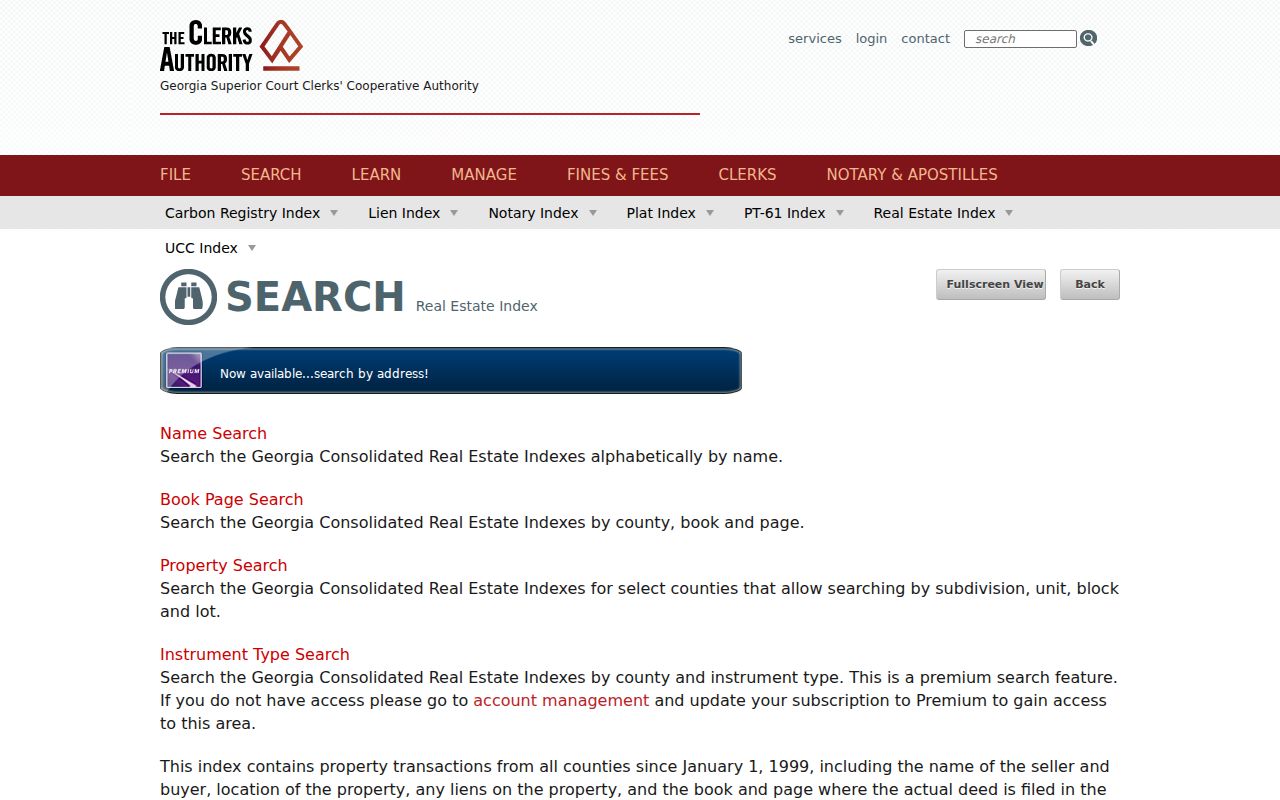
Select Gwinnett and keep each citation. That discipline lets the next search follow the land instead of guessing from names alone.
Current Duluth Resident Directory Sources
Current Duluth records are separate, purpose-built rolls. The best source depends on the question, whether it concerns land, a recorded transfer, a personal voter check, a case, a permit, or a public professional role. Commercial people-finders merge stale files. They rarely show the source behind a listing. Official systems are narrower, but they name the custodian and make verification possible.
| Official source | Record role | Custodian | Access route |
|---|---|---|---|
| Property roll | Assessed owner and parcel | Gwinnett Board of Assessors | Free web search, county contact, records request |
| Deed index | Grantors, grantees, liens, and plats | Gwinnett Clerk / GSCCCA | Web index and images; free office viewing |
| My Voter Page | The user's own status and precinct | Georgia Secretary of State | Authenticated online lookup |
| Court index | Named parties and case events | The court holding the case | Portal, clerk counter, request, certification |
| Duluth permit search | Service address and filing roles | City of Duluth | Web search, phone, city records request |
Use the narrow public role the record shows. The Duluth resident lookup gives the detailed one-person verification sequence. No filing role, address, or ownership field proves residence.
Use Duluth resident records only for lawful personal research. Do not use an address trail to stalk, harass, threaten, or harm anyone.
Check Duluth Voter Records Correctly
Georgia's My Voter Page exists so a voter can check their own status. It asks for a first initial, last name, county, and date of birth. Those fields make it a personal tool, not a street directory. A match can show registration status, precinct and polling place, elected officials, a sample ballot, and participation history. Georgia voters do not register by party. Participation history never reveals how anyone voted.
Full voter-list products work differently. They operate under O.C.G.A. §§21-2-225 and 21-2-229, which set stated purposes, ordering rules, and protected-field exclusions. Gwinnett Elections administers registration locally and keeps precinct records. A narrow written request can name the election, precinct, date, and format wanted. My Voter Page has no public street-browse mode, so treat it as nothing close to a Duluth residents directory. The My Voter Page form appears on the official screen below.
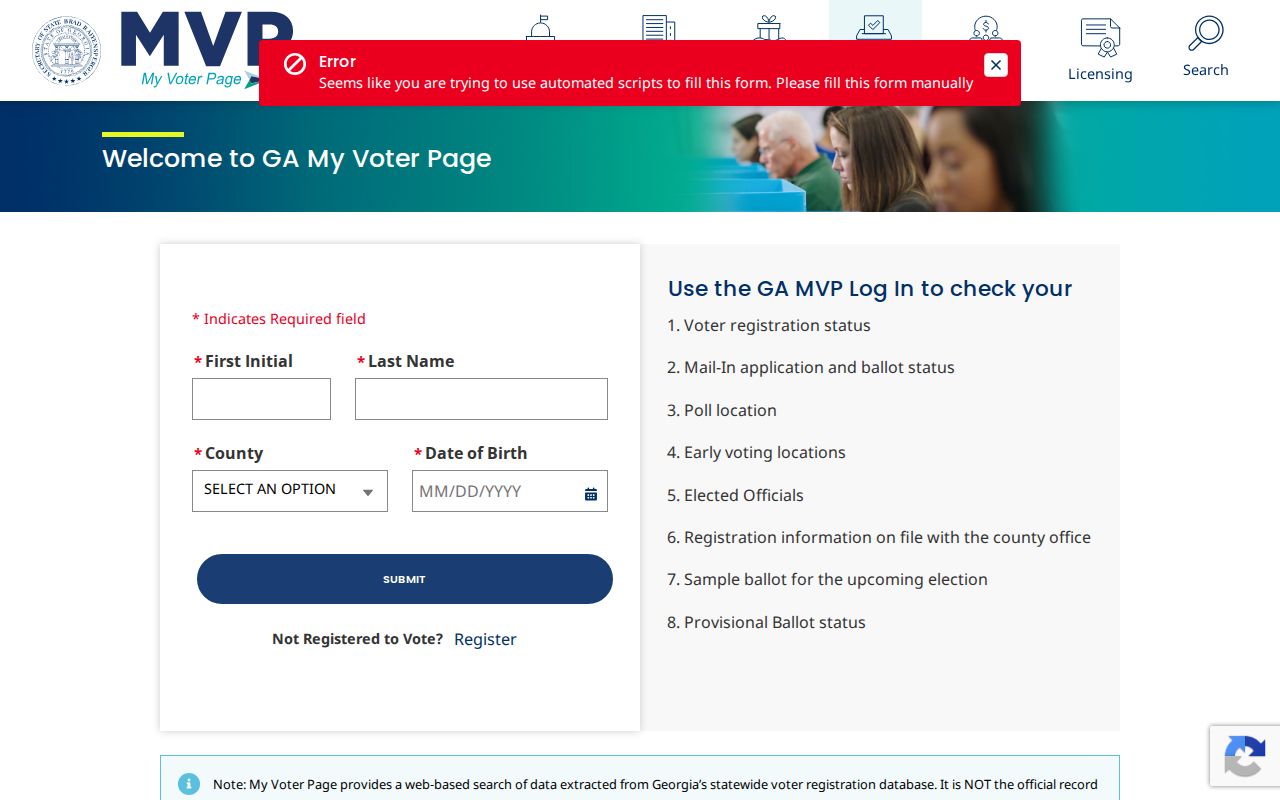
The input fields tell the story. This is a personal status check, not an open browse of every resident on a Duluth block.
Choose the Right Duluth Court
Court records for a Duluth name split across many doors. Options include Duluth Municipal Court, Gwinnett Recorder's Court, Magistrate Court, State Court, Superior Court, Probate Court, Juvenile Court, and Georgia appellate courts. The list also reaches the Northern District of Georgia. Jurisdiction always comes first. The Gwinnett case-search gateway routes county trial and probate-estate searches to the right systems. It keeps Recorder's Court separate.
A result can display case number, court, case style, filing date, type, status, party roles, and attorneys. Event dates and hearings can appear too. Read the final disposition, not just the label. A case name or charge is not proof that an allegation held up. Sealed, juvenile, adoption, and other protected material stays closed even when a name is public. The clerk supplies the official file. A certified copy comes from the clerk when one is available. The Gwinnett court gateway shows the split among these local case systems.
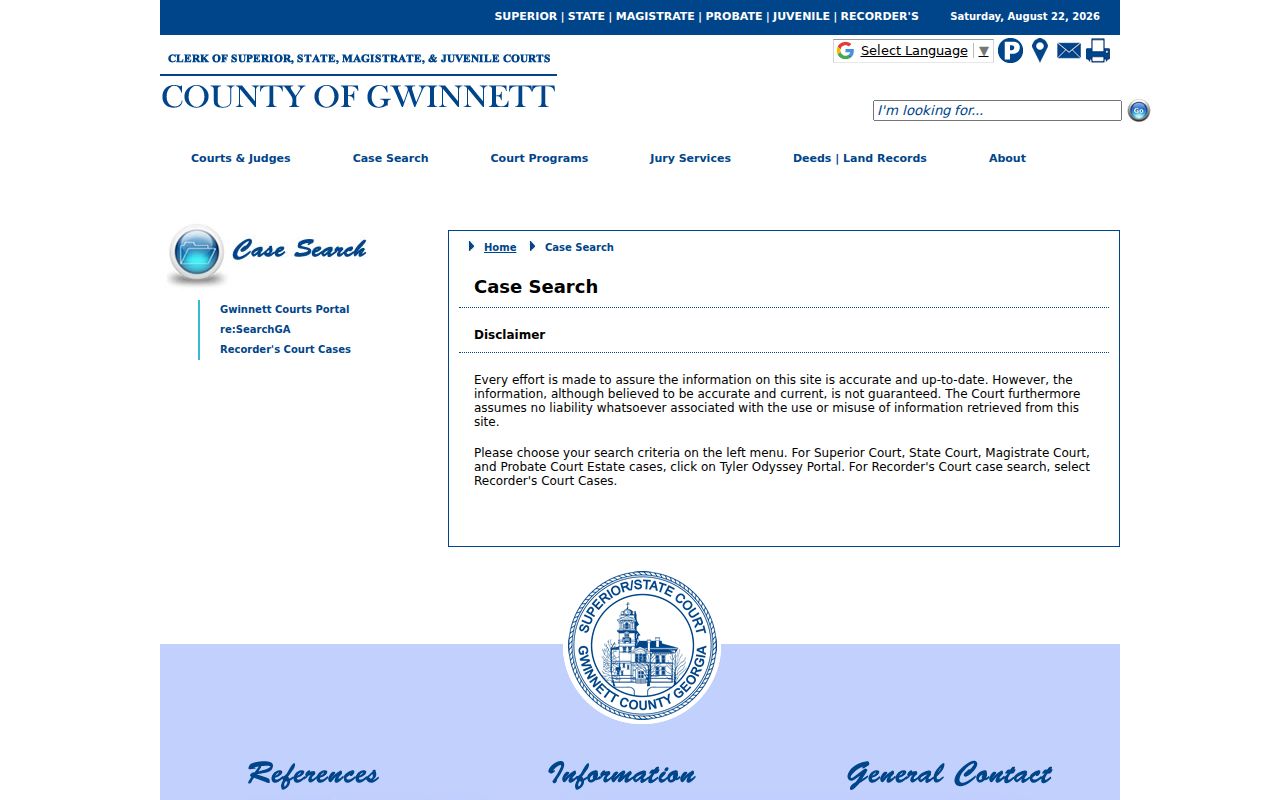
Start with the court named on the citation or filing. That habit prevents a false no-result from the wrong database.
Duluth Vital Records Have Gates
Vital records in Georgia are not a public name browser. The State Office of Vital Records guards them closely. State birth and death coverage begins in January 1919. Birth certificates require a direct and tangible interest under O.C.G.A. §31-10-26. Certified death copies also require qualifying interest. Anyone may request a plain-paper Georgia death record with the Social Security number removed.
Marriage coverage has its own shape. State applications and certificates cover June 1952 through August 1996. Verification is available for 2014 forward. Gwinnett Probate holds the county's other marriage years. Divorce files belong to Superior Court, while state verification spans that same 1952-to-1996 window. Requests can go through state forms or approved online channels. Mail, an eligible county office, or in-person service also work. When gaps appear, probate files, newspapers, church records, and the Georgia Archives often help. The DPH vital-record hub lays out the official routes by event type.
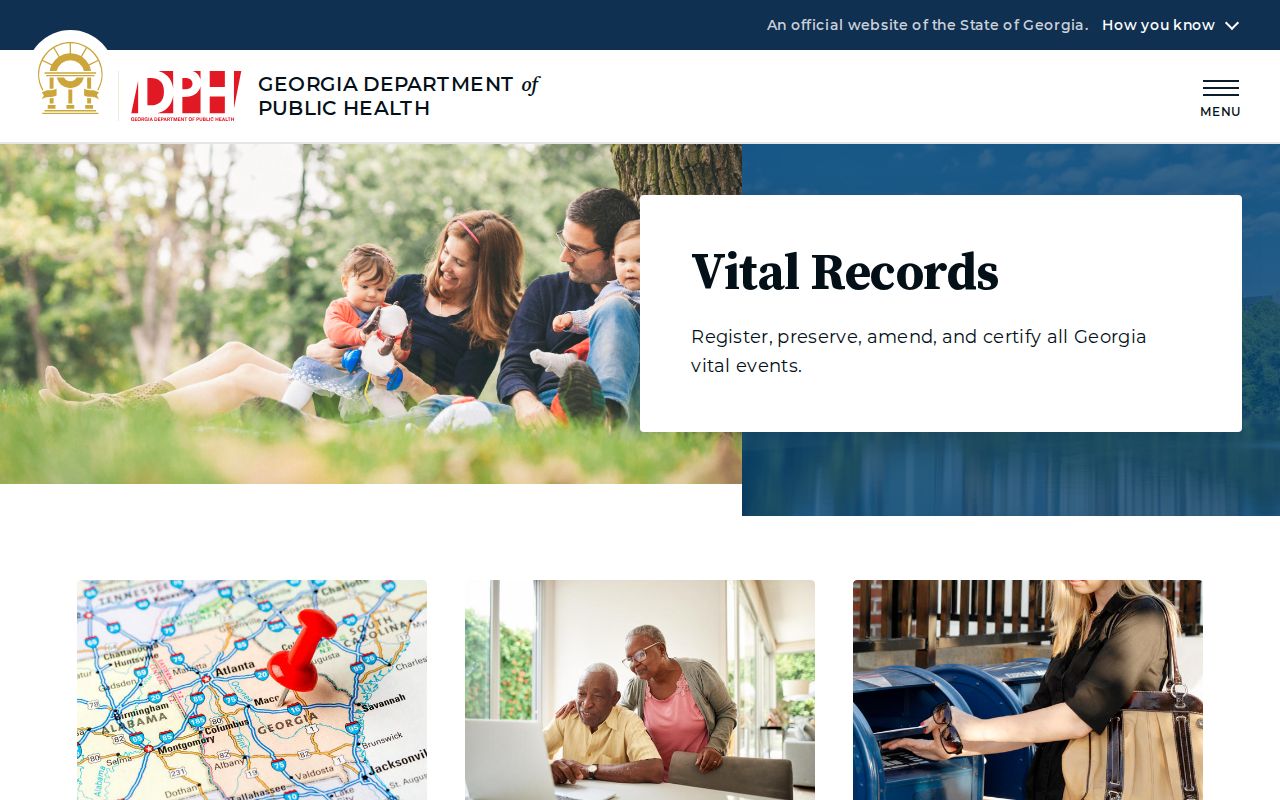
Pick the event and coverage period before ordering. That step keeps a restricted certificate service from being mistaken for a general Duluth resident search.
Historical Duluth Resident Directory Trails
Duluth has no verified, continuous city-directory run in the official catalog. Search item records before trusting any publisher or year claim. The local alternatives are strong, though. Gwinnett County Public Library offers Ancestry Library Edition and FamilySearch on site. It also provides HeritageQuest through GALILEO. Its microfilm room holds county census film from 1820 through 1920. Only the lost 1890 count is missing. Long newspaper runs serve obituaries, marriages, schools, civic groups, and past residents of Duluth.
The GCPL microfilm holdings include the Weekly Gwinnett Herald from June 1871 through December 1897. The News Herald runs from July 1894 through January 1965. The Gwinnett Daily News spans February 1965 through September 1992. The Gwinnett-Post Tribune continues through September 1995. The Gwinnett Daily Post picks up from September 1995 forward. Readers can print, save, or email images from the film. Librarians can also take research requests. This microfilm room is the key historical Duluth residents directory channel in the county.
Search across every newspaper title change. The Gwinnett Daily News moved from Lawrenceville to Duluth on July 16, 1991, so one paper's trail crosses two towns.
The 1871 Duluth Deed Boundary
Gwinnett's surviving deed series begins on September 26, 1871. A courthouse fire destroyed the earlier land records. That is a hard archival limit, not a search-box failure. Later, a county imaging project scanned and indexed more than twelve million real-estate documents. The surviving trail is far easier to search now. The earlier loss remains.
When a chain hits the fire line, work sideways. Later deeds often recite prior facts. Surviving plats, probate estates, tax digests, and newspapers can support a family or land history. Family papers, church and cemetery sources, and Georgia Archives material can too. None of them can recreate a deed that no longer exists. Since January 1, 2025, Georgia HB 1292 has required real-estate filings to be submitted electronically. That rule covers new filings, not public inspection of the older index.
Duluth Mailing City Can Mislead
Two Duluth ZIP Codes, 30096 and 30097, stretch past the incorporated city. Mail carrying a Duluth label may actually sit in unincorporated Gwinnett or inside a different municipality. That matters. Permits, code records, police files, and municipal cases each belong to the government that truly holds the land. Check the parcel in county GIS first. Then compare the city boundary before any request goes to Duluth City Hall.
A postal city, an incorporated limit, a school zone, and a tax district are not the same thing. A voting precinct and a parcel boundary differ too. USPS speaks only to delivery geography. Gwinnett GIS maps jurisdiction. The deed's legal description governs the land reference. Keeping these layers straight stops a residents directory search from pairing a correct name with the wrong government record.
Note: An address can work for mail yet sit outside the City of Duluth's permit and municipal-court jurisdiction.
Request Missing Duluth Public Records
Georgia's Open Records Act, O.C.G.A. §§50-18-70 through 50-18-77, covers nonexempt records. These are records that exist but are not online. A custodian must generally produce the record, respond, or provide a written timetable. That deadline is three business days. The law asks for existing documents only. Staff need not answer research questions or build a custom resident list.
Aim any request at the office that created or keeps the material. Name the department and the record type. Include a name or exact address, a date range, and the electronic format you want. Request an existing parcel extract rather than a fresh analysis. Duluth permits and municipal files run through the city open-records channel. Deeds belong to the Gwinnett Clerk. State records go to the responsible Georgia agency. Exempt, sealed, and protected-address information stays off limits.
Verify Duluth Business Identity
A name attached to a company can be checked through the Georgia Corporations Division Business Search. It covers entities registered in Georgia. Results may include the entity name, control number, and status. They may also list the registered agent, principal office, and filed documents. The Georgia professional licensing search confirms licenses the Secretary of State handles. Both tools help verify an advertised business or licensed professional before money changes hands.
Remember that registered-agent, principal-office, permit, and work addresses are business-record fields. None of them proves a home address. Search summaries are public and free, though copies or certificates can cost money. Older material may survive in archived filings, newspapers, and past period directories. That can extend the paper trail for a Duluth lookup.
The official Georgia entity search displays the business-name route open to Duluth researchers.
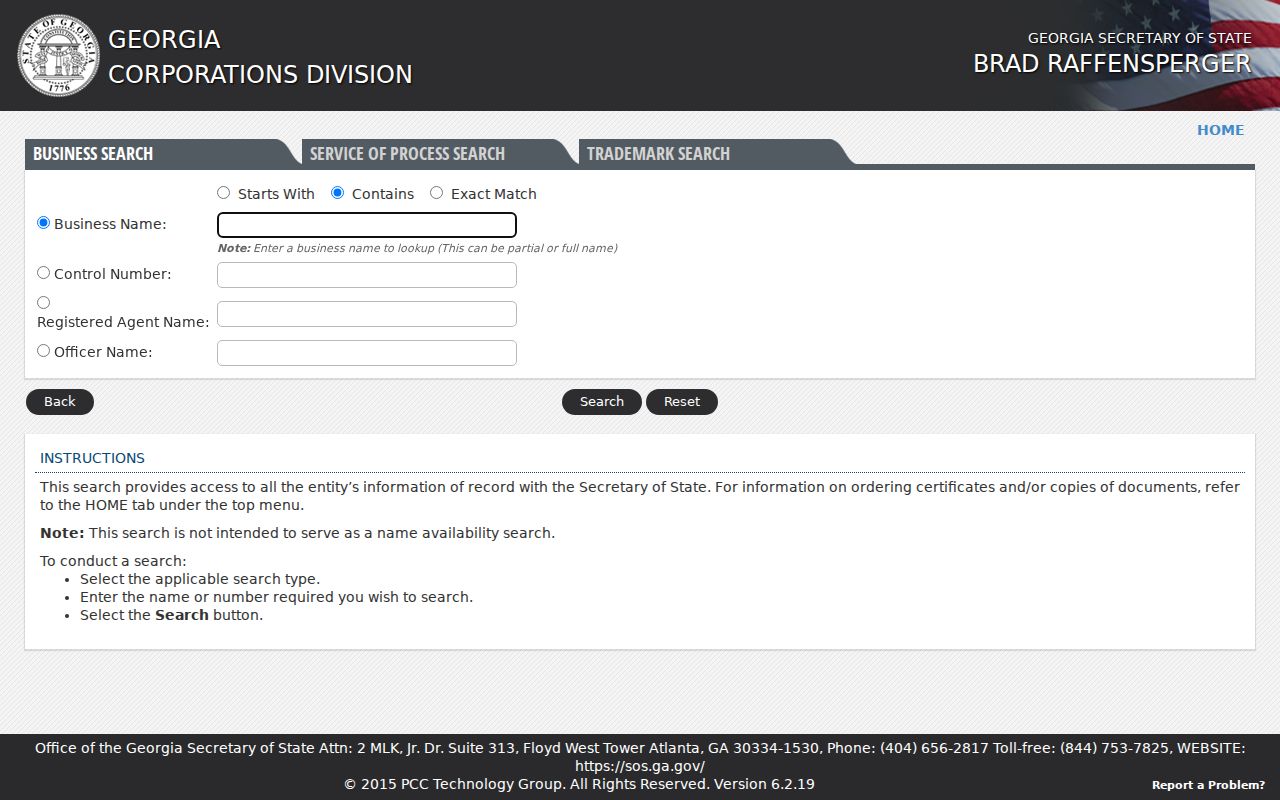
Match the control number and status before relying on a same-name business result.