
Walk a Duluth Street Directory Parcel by Parcel
Start with an exact service address and move outward one parcel at a time. The Gwinnett property roll identifies the assessed owner, while GIS fixes that record to a shape and parcel number. Neither source is a complete occupant roll. A sound Duluth street directory method preserves that limit and adds evidence only when another source supports it.
- Enter the address in the Gwinnett Board of Assessors Property/GIS Search.
- Record parcel ID, situs address, owner, and mailing address as separate fields.
- Open the Gwinnett GIS Data Browser and click parcels in sequence.
- Use deed citations or owner names in GSCCCA to follow grantors and grantees.
- Check Duluth permits only after GIS confirms incorporated city limits.
- For an older household, use a verified reverse directory, census, or newspaper. My Voter Page is a personal lookup, not a street browser.
This turns a vague by-street query into cited observations. For one named person, use the Duluth resident lookup workflow.
Address Records Behind a Duluth Street Directory
No office keeps a master list of everyone at every Duluth address. A street directory combines sources with distinct keepers and limits.
| Source | Keeper | Evidence | Access channels |
|---|---|---|---|
| Property roll | Gwinnett Assessors | Owner, situs, mailing address, parcel facts | Free web search; office or records request |
| GIS map | Gwinnett GIS | Geometry, streets, mapped attributes | Free browser, print, save, share |
| Deeds and plats | Gwinnett Superior Court Clerk | Parties, dates, legal description | GSCCCA; free office view; mail or request |
| Permits | City of Duluth | Type, number, service address, filing roles | eSuite; city request |
| Reverse sources | GCPL and Georgia Archives | Listed subscriber in a covered year | Catalog, database, microfilm, staff help |
| Voter records | Georgia SOS | Limited registration evidence | MVP personal lookup; lawful state route |
The parcel ID joins roll and map. Deeds are mainly party and document indexed, so legal description or book and page beats a modern street spelling. Permit applicants and contractors are not automatically residents.
Search Duluth Streets in the Gwinnett GIS Browser
The Gwinnett GIS Data Browser locates parcels, owners, streets, addresses, and intersections. Search the road, zoom to a segment, then identify each parcel.
| Search category | Parcel, owner, street, address, intersection |
|---|---|
| Search text | Normalized query |
| Identify | Map click opens parcel attributes |
| Layers | Current overlays and legend |
| Output | Print, save, and share URL |
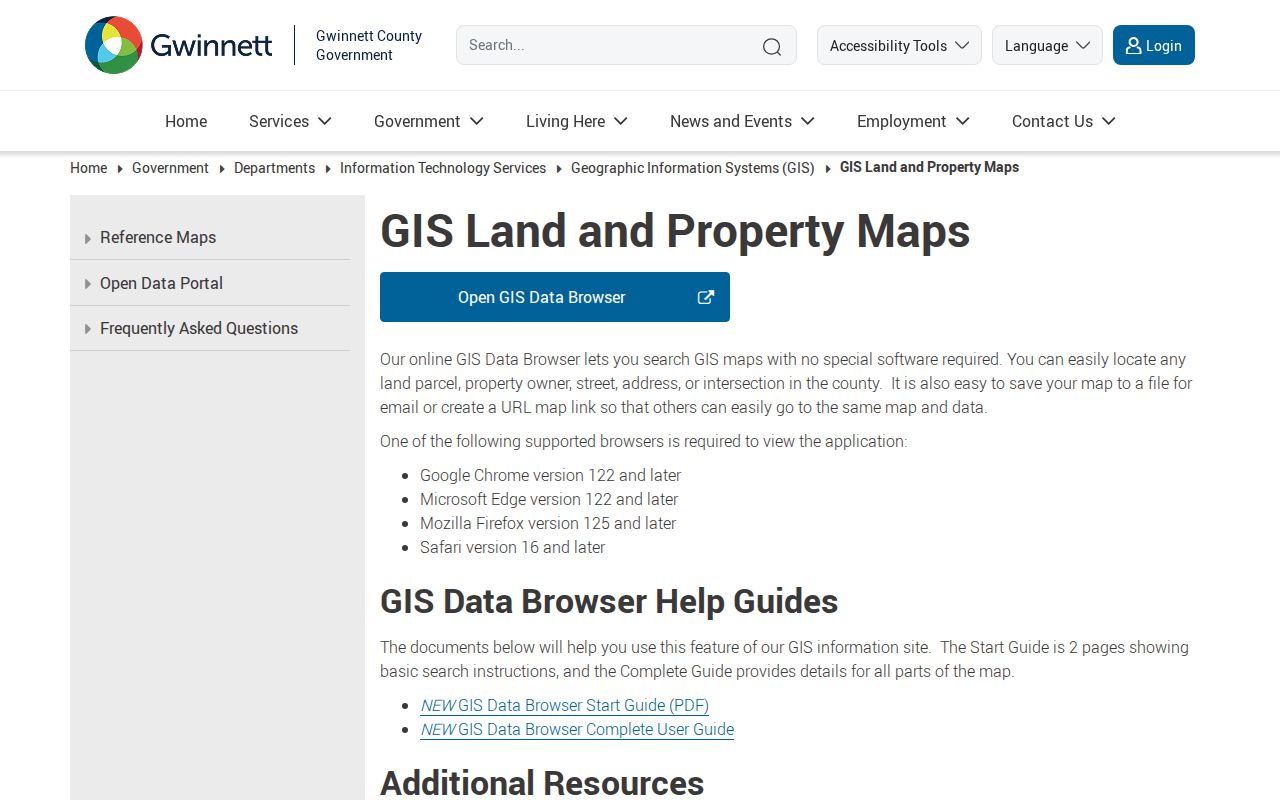
Begin with the street name and avoid adding a directional or suffix until the portal shows how the road is stored. Select one mapped parcel and copy its PIN before moving to the next lot. The identify result connects the map shape to roll attributes, while the layer legend adds road and boundary context. Save or print the result with its search date because parcel attributes and layers can change. If a mapped line matters to a dispute, obtain the recorded plat or a survey rather than measuring the browser screen.
The live legend controls because layers change. A map is context, not a legal survey.
Terms for a Precise Duluth Address Search
Four words prevent common errors in a by-address search.
- Parcel or PIN
- The county key joining roll and map.
- Situs address
- The parcel's physical site, not owner mail.
- Plat
- A recorded lot and subdivision drawing.
- Criss-cross directory
- A volume arranged by street and house number.
The parcel number connects county systems, but it is not a deed citation. A deed book and page points to a recorded instrument. The legal description identifies land through a lot, block, subdivision, land lot, district, acreage, or metes-and-bounds description. Keeping those fields separate matters when a road name or house number changes. It also lets a researcher compare adjoining lots without claiming that every assessed owner lives at the situs address.
Legal description controls the land even if postal formatting changes.
Turn a Duluth Parcel Into a Deed Chain
Search the current owner as grantee, preserve instrument type, recording date, book and page, then search that seller as an earlier grantee. Match legal description at every link. The Gwinnett Deeds and Land Records office is the custodian, not City Hall.
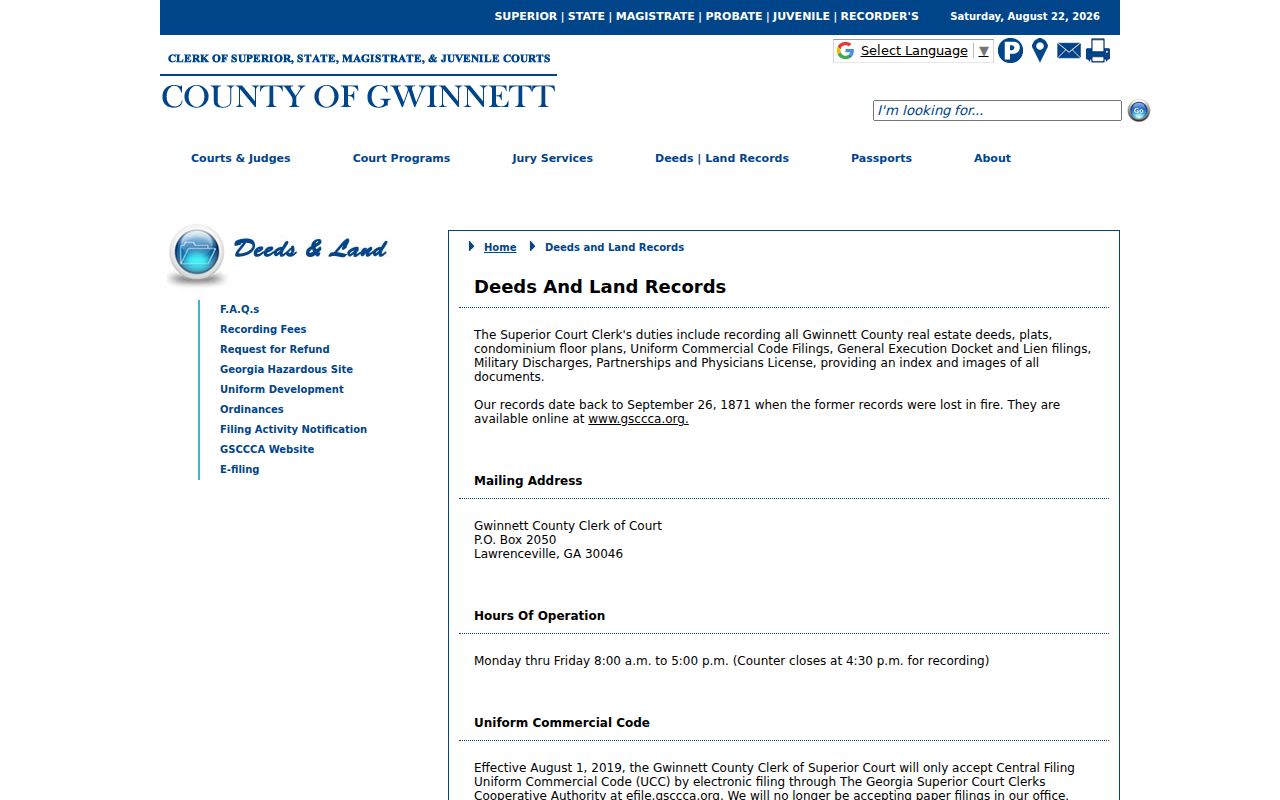
Office searching and viewing at 75 Langley Drive is free, weekdays 8:00 to 5:00; recording closes 4:30. Call 770-822-8100 or mail P.O. Box 2050, Lawrenceville, GA 30046. A narrow Open Records Act request can seek an existing index field.
Duluth Deed Copies and Access Costs
The clerk offers web images, paper copies, and eligible eCertification. The copy FAQ reports $2.50 for the first office page, $1 for later pages, and $10 for a large plat.
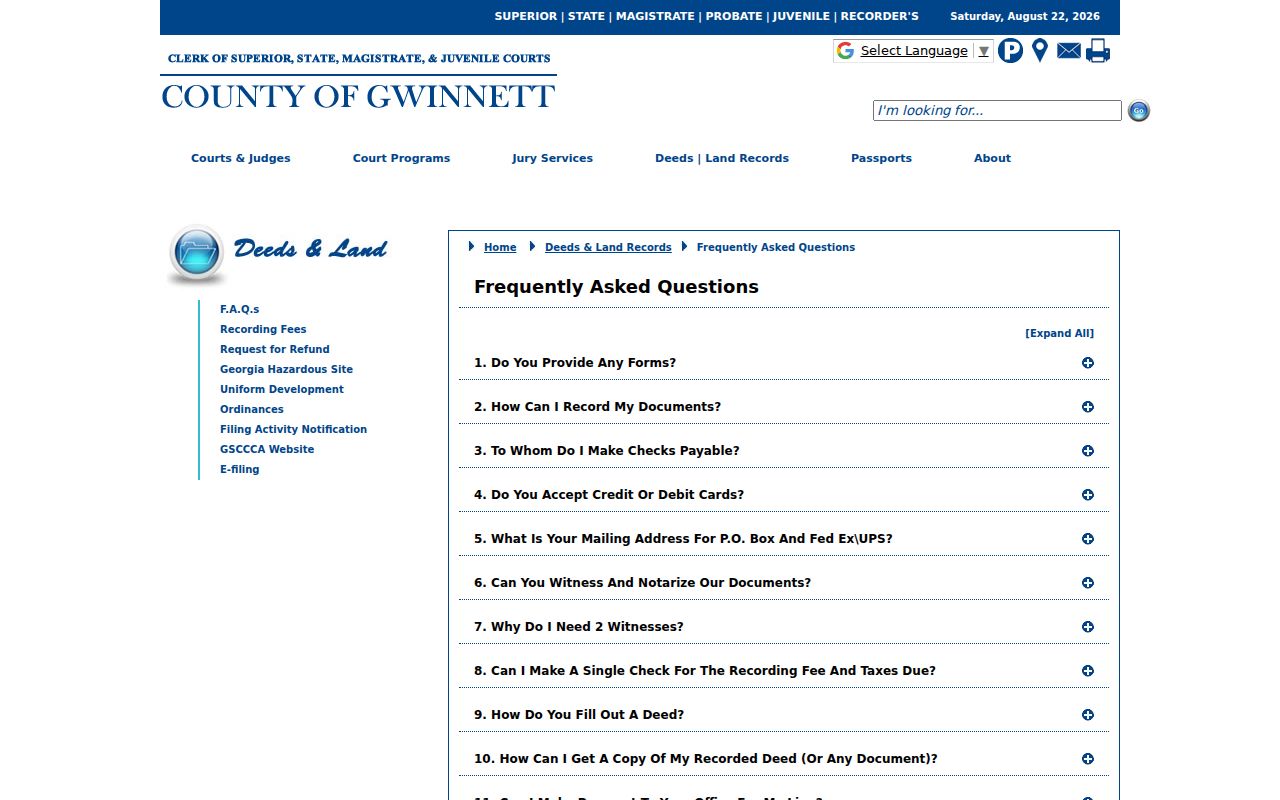
The FAQ supplies a fallback when web access fails.
The fee schedule separates filing charges from copy prices.
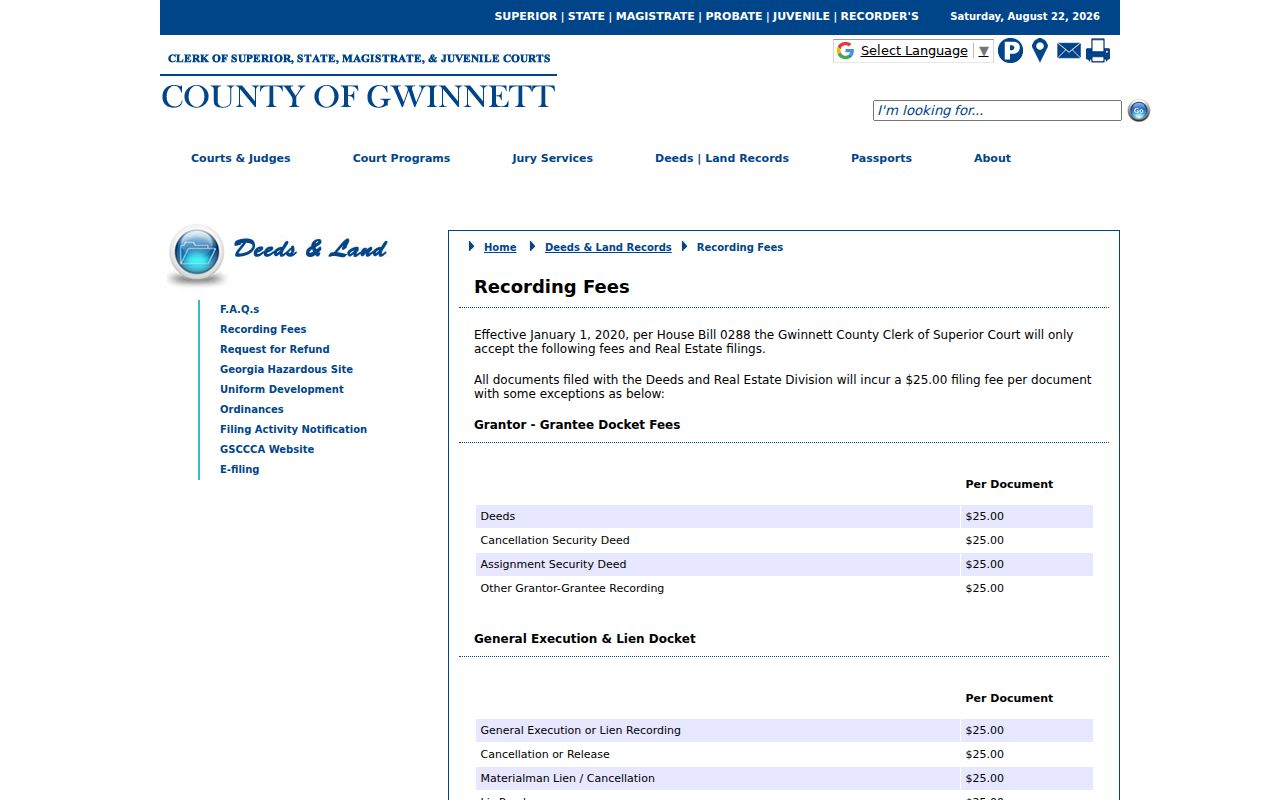
A filing fee is not the price of public inspection.
Add Duluth Permits by Service Address
eSuite accepts Permit Type, Permit Number, and a two-part Service Address. These fields establish work tied to a site, not a household. Parcel questions go to 770-476-1790. Verify city limits first because a Duluth postal address may be unincorporated Gwinnett. If the portal lacks a file, request an existing city record by address, department, type, and date range.
Run the service address with no permit-type filter first, then narrow a long result set. Preserve the permit number because it is the best key for a later request. A result may name an applicant, contractor, owner, or other filing role at the time of the work. Label that role exactly. For an address outside incorporated Duluth, contact Gwinnett Planning and Development instead of asking the city to create or transfer a county file.
Read an Older Duluth Street in Reverse
A verified criss-cross volume moves from street to listed subscriber. No official source confirmed a continuous Duluth publisher and year run, so verify each catalog item. The Duluth city directory guide covers that shelf.
GCPL offers census and newspaper microfilm, on-site Ancestry and FamilySearch, remote HeritageQuest through GALILEO, and research help. Search Howell's Cross, Gwinnett, subdivisions, and land districts as well as Duluth.
Record the volume title, publisher, year, page, column, and abbreviation key. A reverse listing can identify the subscriber associated with an address in that edition, but it may omit other household members and unlisted service. When a year is missing, compare the nearest verified volumes with a census schedule, newspaper notice, obituary, probate entry, or deed. The library microfilm reader can print an image, save it to a thumb drive, or email it, making the citation easier to preserve.
The 1871 Line in Duluth Property History
Gwinnett's surviving deeds begin September 26, 1871 because fire destroyed the former set. A later project scanned and indexed more than twelve million documents but cannot recreate lost deeds. Probate, tax digests, newspapers, church records, and Archives holdings may bridge a family story, not replace a missing instrument.
Later deeds sometimes recite an earlier owner, boundary, or source of title. Treat that wording as evidence inside the surviving document, not as a recovered copy of the lost record. Georgia Archives catalogs county, manuscript, church, cemetery, and family material that may explain who held or used the land. Search both Gwinnett County and Duluth or Howell Cross terms because older records may be cataloged at the county, land-district, or settlement level.
Watch a Duluth Address With Gwinnett FANS
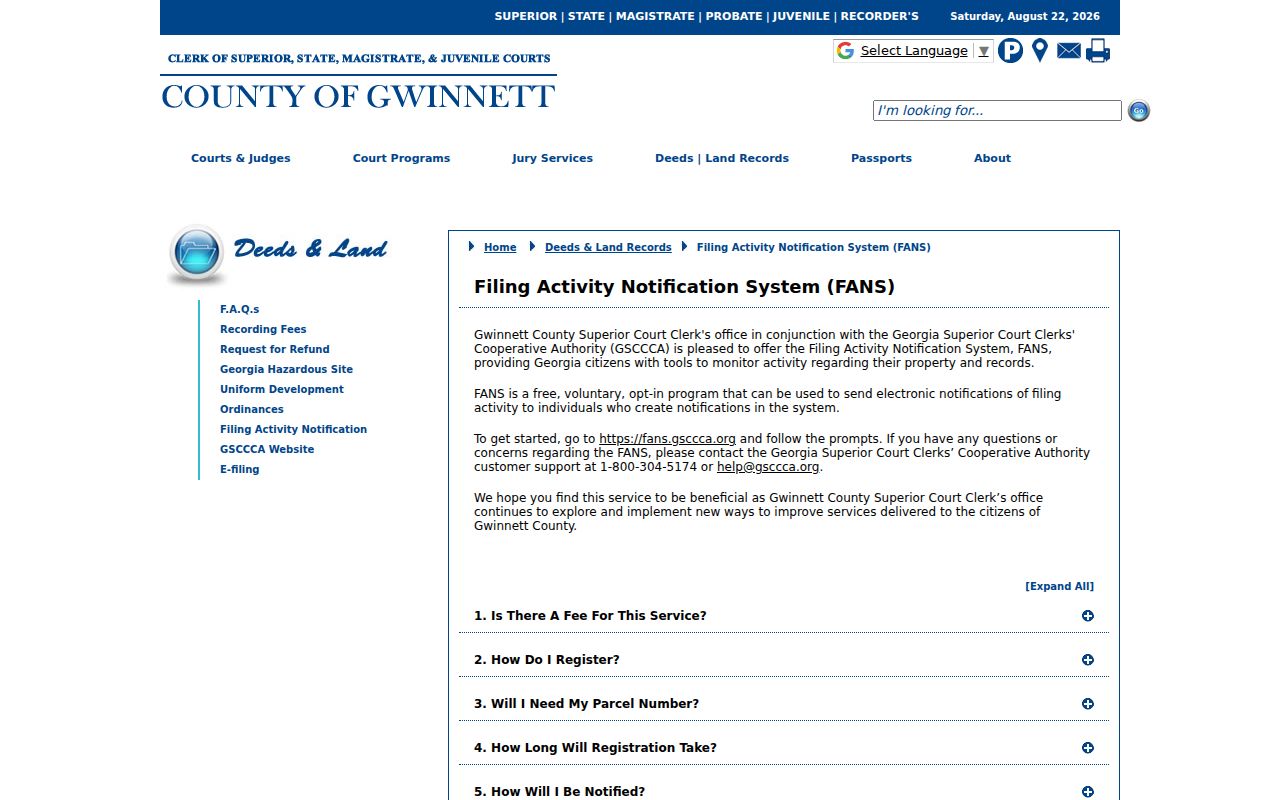
The free FANS service sends email or text alerts by name, address, or document book and page. Each registration is separate. The official instructions explain its limits.
Choose the alert key that matches the saved record. A name alert can catch filings indexed to that spelling, while an address or book-and-page alert follows a more specific property reference. Register each desired notice separately and keep the county selection with the confirmation. When a message arrives, return to the Clerk or GSCCCA, inspect the instrument type and party roles, and obtain the record itself. FANS reports that a filing occurred; it does not confirm the filing is valid, show every parcel event, or replace routine checks of the official index.
An alert has no image and does not prevent fraud; retrieve the filing itself.
Check Each Duluth Street Result Twice
A parcel card is a dated assessment record. Preserve its tax year, parcel identifier, owner name, mailing address, situs address, and deed reference. Compare that reference with the clerk's index rather than assuming the assessor reproduces every title detail. A recent transfer may reach one system before another. An indexing error differs from a substantive deed error, and each has its own correction route.
Search initials, punctuation, entity suffixes, compound surnames, and alternate name order, but never merge results because a surname repeats. A security-deed grantee is commonly a lender, not the buyer. A grantor transferred an interest, but that role alone does not prove residence. Keep party role, instrument type, execution date, and recording date separate.
Georgia My Voter Page asks for first initial, surname, county, and birth date so an individual can check a personal registration, precinct, polling place, officials, and sample ballot. It is not a by-street tool. State data products follow separate restrictions and cover registered voters, not all Duluth residents. Georgia voters do not register by party, and participation history never reveals a ballot choice.
Verify Duluth City Limits Before Requesting Files
Postal city, incorporated boundary, parcel district, school zone, and tax district answer different questions. ZIP 30096 and ZIP 30097 use Duluth across areas larger than the municipality. A mailing label cannot decide whether Duluth or Gwinnett holds a permit or code file. Verify delivery with USPS, then use parcel and boundary evidence to choose the custodian.
City-created council, planning, permit, code, and administrative records belong with Duluth. County property, deeds, plats, probate, and most trial-court records belong in Lawrenceville. The Georgia Open Records Act generally calls for production, a response, or a written timetable within three business days, but an agency need not create a new street list or answer research questions. Ask for an existing record and identify office, address, type, and date range.
If a portal fails, call the office, use its public counter or terminal, mail a focused request, or ask for an existing extract. GCPL and Georgia Archives can add historical context. They cannot certify a modern parcel card or reconstruct a deed lost in the courthouse fire.
Where a Duluth Street Directory Must Stop
Assessment records name owners, not every occupant. Homestead is only an owner-occupancy clue. Voter sources exclude many residents; driver addresses are protected; Safe at Home substitute addresses must remain shielded.
Lawful use. Use Duluth address records for a lawful personal purpose, and never stalk, harass, intimidate, or harm anyone.
Compiled directories may be stale or merge names. Verify each clue with the custodian and save its date.